Athletes in custom uniforms

Crea uniformes de equipo personalizados

Diseña en línea en minutos.
Envía para cotización.

Comprar ahora
249 productos
Ordenar por
Filtrar

Filtrar

  • Venta
  • Venta
  • Venta
Página anterior 1 2 3 4 5 7 Página siguiente

More About SPC Deportes Lanzamiento rápido Guantes

SPC Sports ofrece una amplia gama de guantes de fastpitch de alta calidad diseñados para mejorar tu rendimiento en el campo. Ya sea que juegues en el cuadro interior, exterior o detrás del plato, tenemos el guante perfecto para satisfacer tus necesidades. Nuestra colección incluye marcas líderes como Rawlings, Wilson, Mizuno y Easton, lo que garantiza que obtengas el mejor ajuste, comodidad y durabilidad. Estos guantes están fabricados con materiales superiores, lo que proporciona un tiempo de adaptación rápido y un rendimiento duradero, para que puedas concentrarte en hacer jugadas ganadoras. Perfectos para jugadores de todos los niveles de habilidad y edades.

Free Shipping

On all orders over $100

Special Offers

Regular Sales and discounts

Easy Returns

Hassle Free Return Policy

Vip News Letter

Sign up and stay up to date

Frequently Asked Questions

  • Glove size in fastpitch is measured from the heel of the palm to the tip of the index finger. Youth players ages 8 to 12 typically use 10.5 to 11.5 inches. Middle school players use 11.5 to 12 inches. High school and adult infielders use 11.5 to 12 inches and outfielders use 12.5 to 13 inches.

  • Fastpitch gloves are designed for a larger 11 or 12-inch softball and feature a deeper, wider pocket than baseball gloves. Many fastpitch-specific models also have a narrower wrist and smaller finger stalls built for the female hand. Using a baseball glove for fastpitch is suboptimal because the pocket is too shallow and narrow for a softball.

  • Most fastpitch infielders prefer an H-web or I-web for quick ball transfer to the throwing hand. A modified trap web also works well for third basemen who need more pocket stability on hard-hit balls. The key is a pattern that allows the ball to be retrieved from the pocket quickly without catching on the webbing.

  • Pitchers use a closed web to conceal the ball and grip from the batter during the wind-up. A solid web, closed basket, or tight 2-piece web are the most common choices. Any open web pattern that allows the batter to see the ball in the pitcher's hand should be avoided.

  • A catcher's mitt has no individual finger dividers, a heavily padded round design, and a single break oriented across the palm. It is built to handle the impact of pitches thrown 50 to 65 mph, which a standard fielding glove cannot do safely. In organized play, catchers are required to use a catcher's mitt, not a fielding glove.

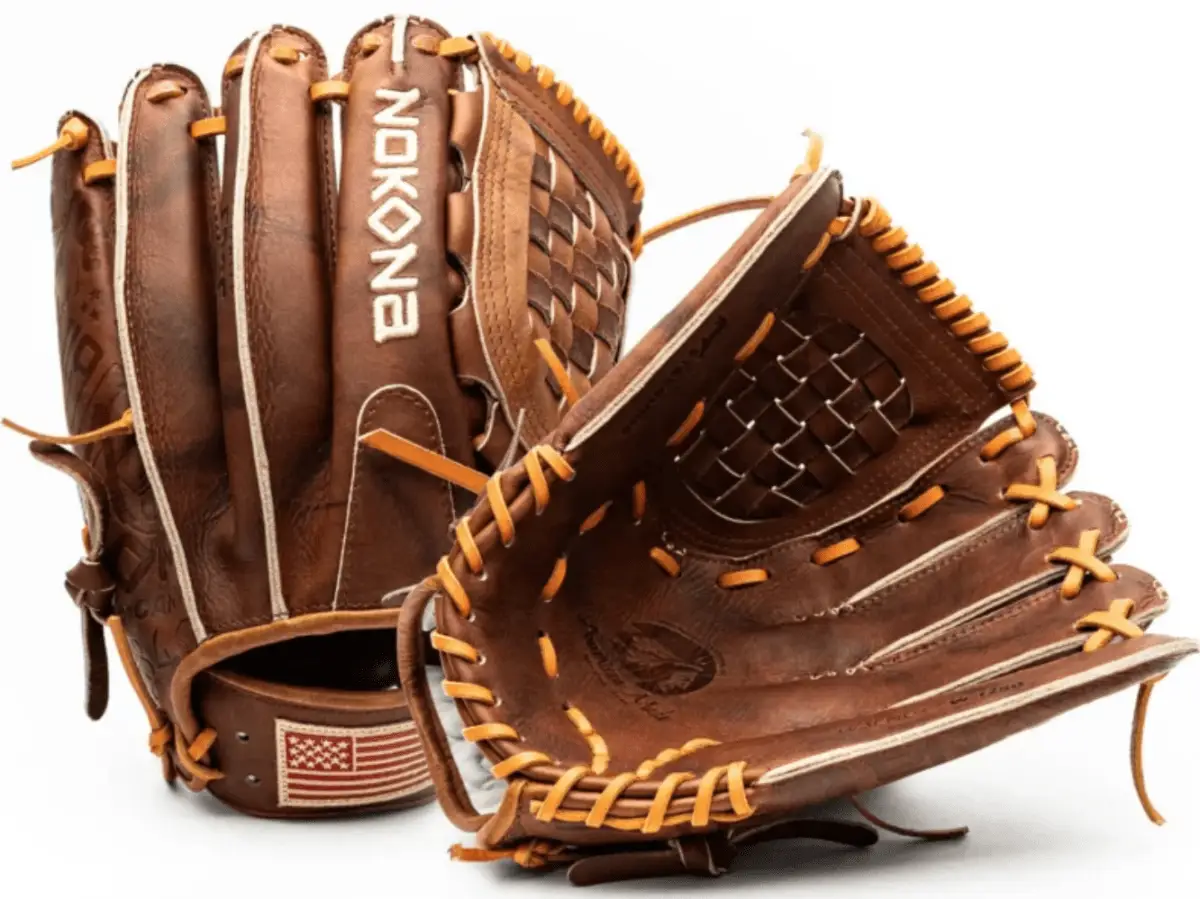
  • Synthetic gloves are softer and game-ready out of the package, making them a good starting point for younger or beginner players. They are lighter and more affordable. Full-grain and top-grain leather gloves from Wilson, Rawlings, and Nokona take longer to break in but last significantly longer and conform to the player's hand shape over time. Competitive travel ball players typically benefit from a quality leather glove.

  • Breaking in a premium leather glove takes two to four weeks of regular use. Apply a thin coat of glove conditioner, work the pocket by hand, and play catch daily. Some players put a ball in the pocket and secure it with a rubber band overnight to hold the shape during the break-in period.

  • Fastpitch catchers typically use a 32 to 33-inch catcher's mitt. Younger players ages 10 to 12 often start with a 32-inch model. High school and adult catchers usually move to 32.5 or 33 inches. A smaller mitt is easier to close and frame pitches but sacrifices some reach on pitches outside the zone.

  • Batting gloves are not required by any league rule, but many players use them for grip control, blister prevention, and hand protection on mishits. They are particularly useful for players using end-loaded bats, playing in cold weather, or taking a high volume of swings in practice.

  • We carry Wilson, Rawlings, Nokona, Mizuno, Easton, and Shoeless Jane, among others. Each brand offers distinct leather grades, web patterns, and construction styles.

  • No. Right-handed throwers wear the glove on their left hand, which is a left-hand throw (LHT) or standard orientation glove. Left-handed throwers wear the glove on their right hand and need a right-hand throw (RHT) glove. This is one of the most common ordering mistakes — always confirm the throwing hand on the product listing before purchasing.

  • The Nokona S1 series is a line of baseball and softball gloves handmade in Nocona, Texas from American bison leather. They are known for exceptional durability and a traditional feel that improves with use over years. They require more break-in than most factory gloves but hold their shape and structure significantly longer.

  • Clean the glove with a damp cloth, apply a light coat of conditioner, and store it with a softball in the pocket secured by a rubber band or lace. Keep it in a cool, dry location away from direct sunlight and heat, which dry out and crack leather over time.

  • The Easton Ghost NX line is built specifically for the female hand, with a narrower wrist, smaller finger stalls, and a lighter overall build than unisex glove models. It is designed for fastpitch players who find standard gloves too wide at the wrist or too long in the finger channels.

  • Technically yes, but it is not ideal. Infield gloves are smaller and shallower for quick transfers, while outfield gloves are longer with a deeper pocket for catching fly balls. Players who play multiple positions during a season sometimes carry two gloves, one for each position type.