Athletes in custom uniforms

Build Custom Team Uniforms

Design online in minutes.
Submit for a quote.

Shop Now
456 products
Sort by

More About Baseball Bats

SPC Sports carries one of the largest in-stock selections of baseball bats in the country, with current-season and prior-season models from Marucci, DeMarini, Louisville Slugger, Easton, Victus, Rawlings, Warstic, Soldier Sports, Anderson, Tucci, StringKing, and Mizuno. We stock BBCOR bats for high school and college players, USA bats for youth leagues under Little League and USA Baseball, USSSA/1.15 BPF bats for travel ball, and wood bats for players who want the feel of a pro-style stick. Drop weights run from -13 for tee-ballers all the way to -3 for varsity and adult players.

How to Choose the Right Baseball Bat

The first decision is certification, because using the wrong stamp in a sanctioned game leads to an automatic out or ejection. The second is material and construction. The third is drop weight.

Shop by Certification

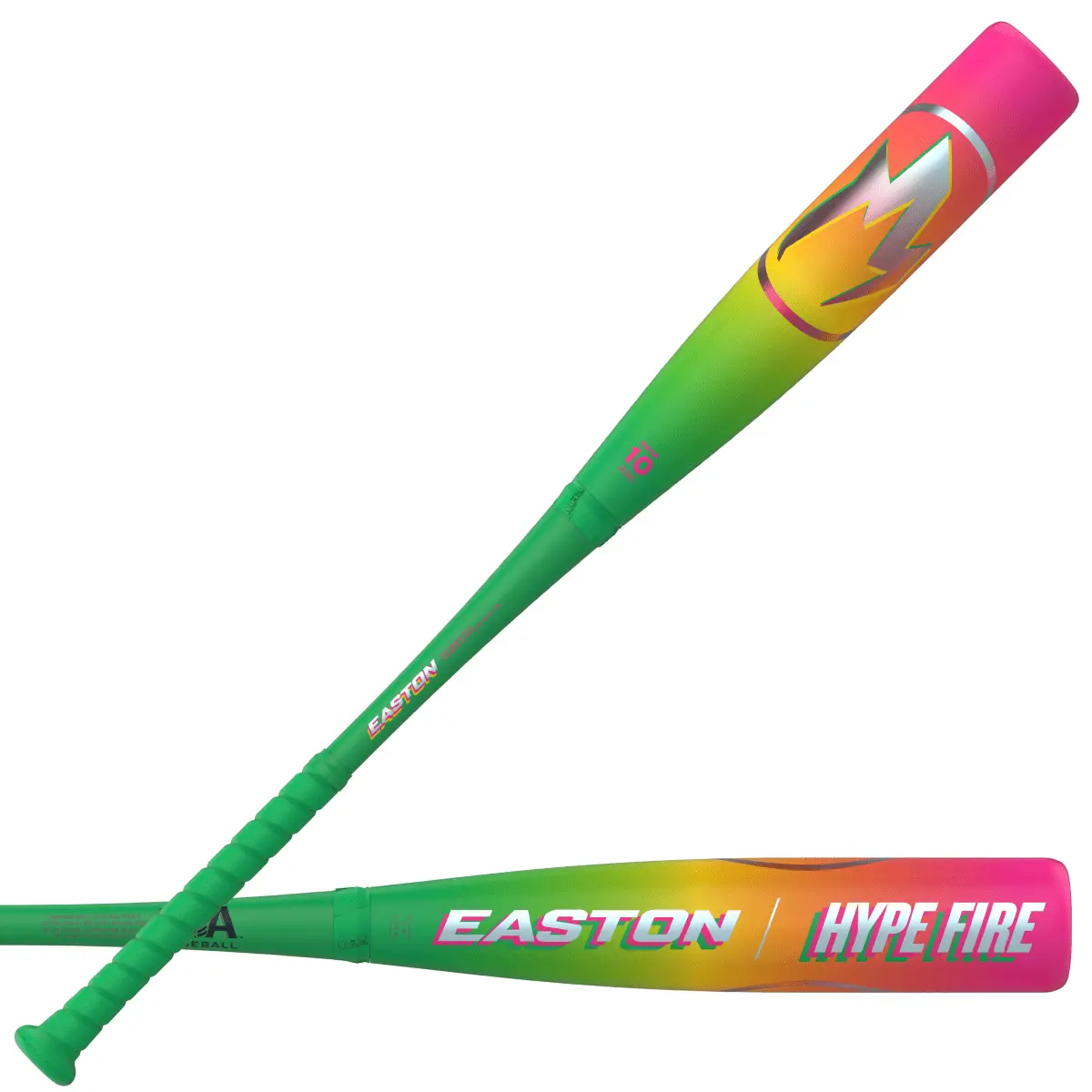
BBCOR bats are required at the high school and college levels under NFHS and NCAA rules. BBCOR limits the trampoline effect of the barrel, so exit speeds are more controlled than travel ball. Most BBCOR bats are -3, meaning a 33-inch bat weighs 30 ounces. Top BBCOR models in our inventory include the DeMarini The Goods, DeMarini Exile, DeMarini Voodoo One, Louisville Slugger Atlas, Louisville Slugger Select PWR, Easton Hype Fire, Marucci CATX RCKLESS, Rawlings Icon, Rawlings Clout AI, Victus Surgo, Victus Pencil, and Soldier TANK 2.

USA bats carry the USA Baseball stamp and are required in Little League, Cal Ripken, Babe Ruth, PONY, and most rec leagues for players age 13 and under. USA bats are available in a wide range of drop weights from -13 down to -5, covering tee-ball through 13U play. Brands like Rawlings, DeMarini, Louisville Slugger, Easton, Victus, and Warstic all have strong USA bat lineups in our catalog.

USSSA/1.15 BPF bats are the standard for travel ball and competitive youth baseball. USSSA allows a higher barrel performance than USA, which produces faster exit speeds and is why travel ball hits tend to go farther. USSSA bats are available in drop -5, -8, -10, and more, covering 8U through 14U players. Models like the Easton Hype Fire, Easton The DUB, Louisville Slugger Supra, DeMarini ZEN, Marucci CATX RCKLESS, and Rawlings Icon Fest lead this category in our inventory.

Wood bats are used in wood-only leagues, batting practice, and by players who train with wood to improve their contact skills. We carry maple, ash, and birch models from Marucci, Victus, Louisville Slugger, and Tucci, including the popular torpedo barrel profile that has gained serious traction at all levels.

Material Breakdown

Composite bats have a larger sweet spot and trampoline effect that increases after break-in. They reduce vibration on mishits and are the top choice for travel ball. Alloy bats are ready immediately, feel stiffer at contact, and perform well in cold weather when composite barrels can crack. Hybrid bats pair a composite handle with an alloy barrel for a middle-ground option.

Clearance and Accessories

Prior-season models at reduced prices are in our baseball bat clearance section. Grips, pine tar, knob pads, and bat bags are in our bat accessories section. We also run a bat trade-in program if you want credit toward an upgrade.

Related Categories

Baseball Gloves | Baseball Catcher's Gear | Baseball Helmets | Baseballs

From the SPC Sports Blog

Free Shipping

On all orders over $100

Special Offers

Regular Sales and discounts

Easy Returns

Hassle Free Return Policy

Vip News Letter

Sign up and stay up to date

Frequently Asked Questions

  • BBCOR is required for high school and college play (NFHS and NCAA rules). USA Baseball certification covers most youth recreational leagues including Little League, Cal Ripken, Babe Ruth, PONY, and Dixie. USSSA/1.15 BPF covers competitive travel baseball. Each certification uses a different performance standard. Using the wrong bat in a sanctioned game is a rules violation.

  • No. Little League Baseball requires USA Baseball-stamped bats. USSSA bats are not legal for Little League play. This is one of the most common equipment mistakes families make when transitioning from rec ball to travel ball or back. Always confirm which certification your specific league requires before purchasing.

  • Tee-ball players typically use -12 or -13. Players in the 8U to 10U range usually use -10 to -12. The 11U to 12U range typically uses -10 to -8. High school players use -3 BBCOR. A good starting point is the lightest bat the league allows in a weight the player can swing with control and full bat speed through the zone.

  • BBCOR stands for Batted Ball Coefficient of Restitution. It limits the trampoline effect of non-wood bats to a maximum of 0.50, which is designed to produce exit speeds closer to those from wood bats. This is why BBCOR bats do not perform as dramatically differently from wood as USSSA travel bats do.

  • Both composite and alloy BBCOR bats are widely used at the high school level. Composite bats offer a larger sweet spot and more barrel flex but perform poorly in cold weather. Alloy bats are ready immediately, more durable in cold conditions, and typically cost less. Hybrid bats pair a composite handle with an alloy barrel as a middle option. Personal preference and weather conditions in your region are the key factors.

  • Yes. Most composite baseball bats perform best after 150 to 200 swings on regulation baseballs. Rotate the bat a quarter turn between each swing during break-in to condition the barrel evenly around its full circumference. Never use a composite bat in a pitching machine during the break-in period.

  • Wood bats are used in professional baseball and wood-only leagues at all levels from youth through adult. Many travel ball coaches encourage players to train with wood bats to improve contact consistency, as the smaller sweet spot punishes poor technique more clearly. We carry maple, ash, and birch models from Marucci, Victus, Louisville Slugger, and Tucci.

  • A torpedo bat features an extended sweet spot through a barrel profile that shifts more wood mass toward the contact zone rather than the standard taper to the end cap. It is legal in most leagues for wood bats and is being used by professional players. Non-wood torpedo barrel designs are also available from Marucci and Rawlings. Check your specific league's rules on barrel profile before purchasing.

  • We carry Marucci, DeMarini, Louisville Slugger, Easton, Victus, Rawlings, Warstic, Soldier Sports, Anderson, Tucci, StringKing, and Mizuno. New models from major brands are added as they release throughout the season.

  • USA Baseball certification covers players through age 14 in most rec league organizations. USSSA typically covers 8U through 14U in travel ball. BBCOR is required for high school (14U and up depending on the state) and college. Tee-ball organizations have their own approved equipment lists separate from all other certifications.

  • One-piece bats are stiffer, transmit energy more directly on contact, and provide immediate feedback on mishits through handle vibration. They suit contact hitters who consistently make solid contact. Two-piece bats use a separate handle and barrel connected by a joint that absorbs vibration, producing a softer feel on off-center contact. They are popular with power hitters.

  • Yes, significantly for composite bats. Composite barrels become brittle below approximately 60 degrees Fahrenheit and can crack on impact. Alloy bats are not affected by cold in the same way and are the safe choice for early spring play in northern states. Most composite bat manufacturers explicitly void the warranty for damage sustained in use below their recommended temperature threshold.

  • Our bat trade-in program lets you apply the value of an old bat toward a new purchase. Visit the bat trade-in page on our website for program details, eligible models, and current trade-in values.

  • No. Softball bats are not designed for the 9-inch baseball and are not legal for any organized baseball league. Barrel diameter, length, and weight specifications differ between sports. Using the wrong equipment in a game is a rules violation.

  • Most high school players use 31 to 33-inch bats at -3 BBCOR. A 31-inch bat for a smaller or younger player, 32 for an average-build player, and 33 for a larger or taller player is a general guideline. The right length is the longest bat a player can swing with full control and bat speed through the entire hitting zone.