Athletes in custom uniforms

Build Custom Team Uniforms

Design online in minutes.
Submit for a quote.

Shop Now
45 products
Sort by
Filter

Filter

1 2 Next page

More About Baseball Helmets

Head protection in baseball is non-negotiable, and the rules around what is required have tightened significantly at every level over the past decade. SPC Sports carries baseball helmets and helmet accessories from Rawlings, All-Star, EvoShield, DeMarini, and Mizuno, covering batting helmets, catcher and coach helmets, helmet accessories, and batter protection gear for youth through adult players. Every helmet in our catalog meets current NOCSAE standards required for organized play.

Baseball batting helmets must carry a NOCSAE stamp to be legal in sanctioned competition at every level from Little League through college. Batting helmets come in single earflap and dual earflap configurations. Youth leagues typically require dual earflap helmets for added protection. High school and college players typically use single earflap helmets oriented to the pitching side, and some leagues allow no-earflap helmets for coaches and players in specific positions.

Fit is the most important factor in a batting helmet's protective value. A helmet that is loose will rotate or shift on contact and reduces protection significantly. Most modern helmets use a dial-fit adjustment system at the rear that allows fine-tuning without switching sizes. Measure head circumference at the widest point, about an inch above the eyebrows, and match it to the size chart on each product page.

Face guards are required for youth players in virtually all leagues and are recommended for all players at the high school level and below. Face guards attach to the helmet's front rail and are available in single-bar, double-bar, and full cage configurations depending on the league and position.

Catcher and Coach Helmets

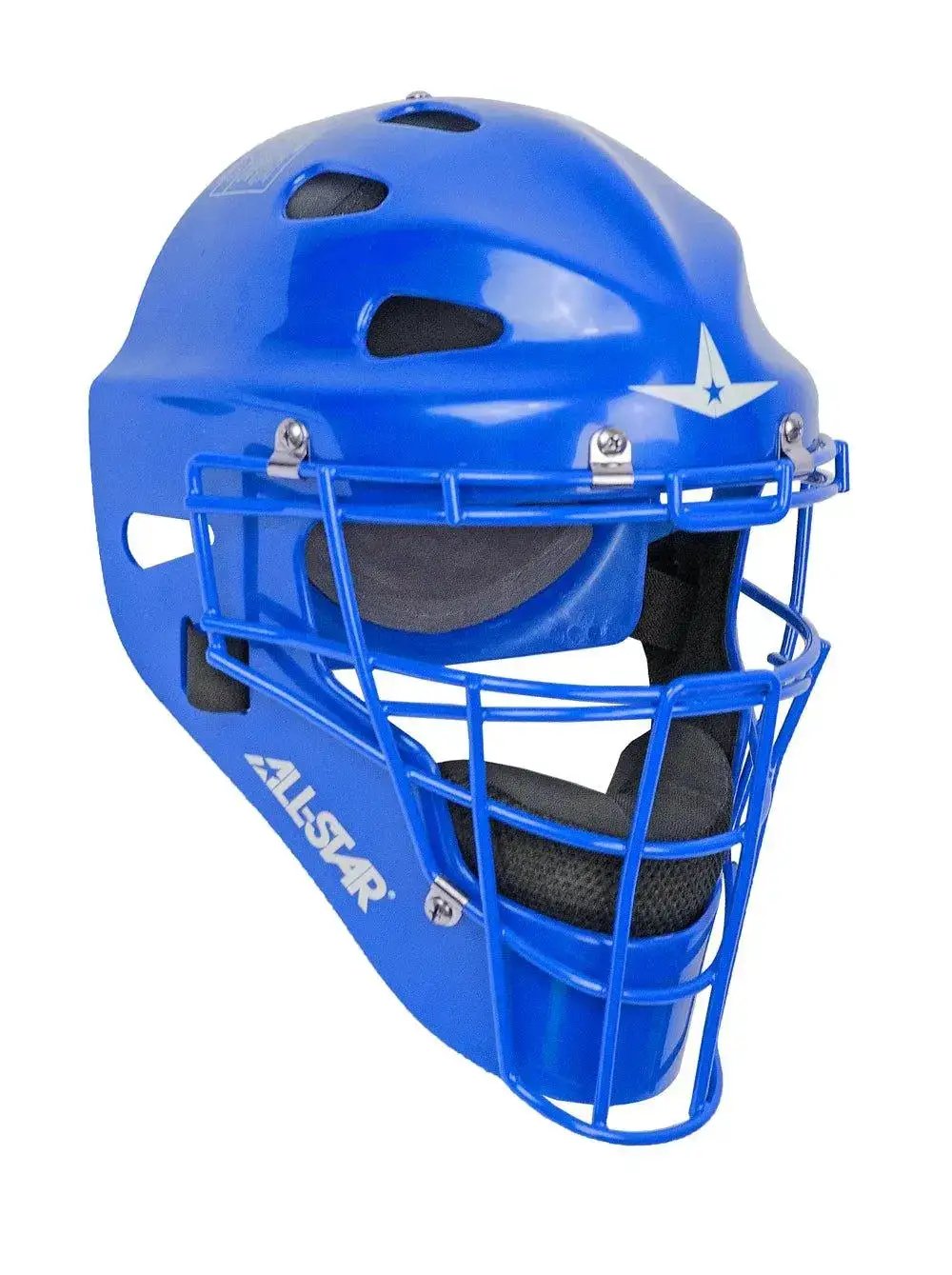
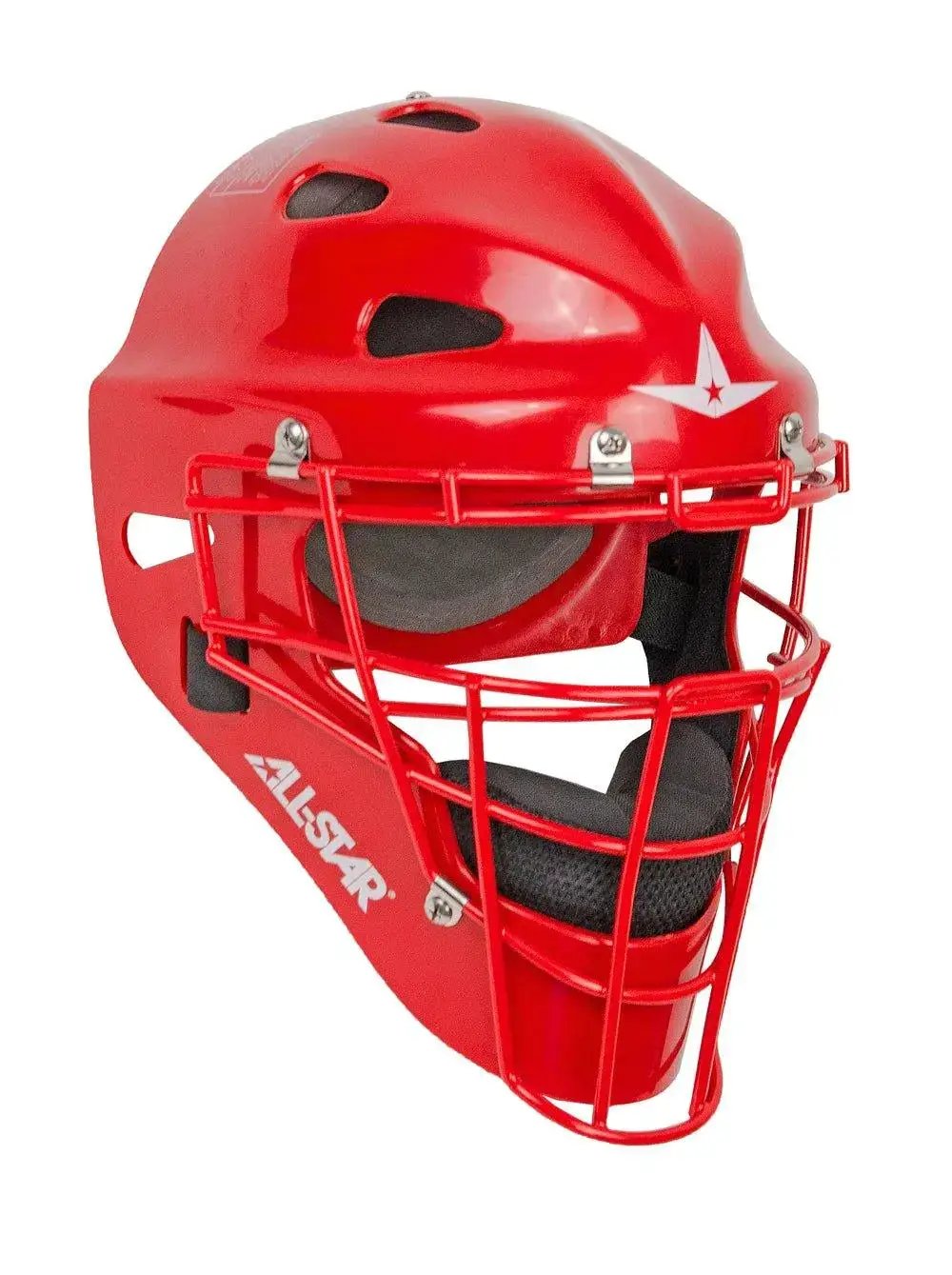
Catcher and coach helmets serve distinct protective needs. Catcher helmets must provide full skull, ear, and jaw coverage and pair with either a separate wire mask or an integrated hockey-style cage. First and third base coaches in youth leagues are required to wear helmets on the field during games in most sanctioning organizations. Coach helmets are typically the same models used for batting, sometimes without an earflap, depending on the rule set.

Helmet Accessories

Helmet accessories include replacement face guards, jaw guard attachments, replacement interior padding, helmet bags, and sticker kits. If a face guard bends, cracks, or loses a securing rivet, replacing it rather than the entire helmet is a quick and inexpensive fix.

Batter Protection

Batter protection gear covers elbow guards, wrist guards, and shin guards worn at the plate. EvoShield's gel-to-shell technology remains the most popular option in this category, producing a custom-molded guard that hardens to the exact contour of the player's arm or wrist and stays in place during the swing. These are legal in most leagues and widely used at the high school and college levels.

Related Categories

Baseball Catcher's Gear | Baseball Bats | Baseball Gloves | Baseball Apparel

From the SPC Sports Blog

Free Shipping

On all orders over $100

Special Offers

Regular Sales and discounts

Easy Returns

Hassle Free Return Policy

Vip News Letter

Sign up and stay up to date

Frequently Asked Questions

  • Yes. NOCSAE certification is required for batting helmets in all organized youth, high school, and college baseball competition. The NOCSAE stamp is printed inside the helmet. This certification confirms the helmet has passed impact attenuation testing at the required performance standard.

  • Face guards are required for youth players in most organized leagues including Little League, travel ball, and rec leagues through approximately age 12. Requirements at the high school level vary by state athletic association. Many states allow no-face-guard helmets at the varsity level; others mandate a guard for all batters. Check your specific state's rulebook.

  • Use a flexible measuring tape around the widest part of the head, approximately one inch above the eyebrows. Match that circumference in inches to the helmet's size chart. Most youth helmets cover head sizes from 6 3/8 to 6 7/8 inches. Adult helmets typically run 6 7/8 to 7 1/2. Models with a rear dial-fit system provide more precise adjustment within a given size range.

  • A single earflap helmet places padding on the side facing the pitcher when the player bats. A right-handed batter's helmet has the earflap on the left side. Dual earflap helmets protect both ears and are required in most youth leagues. Some leagues require dual earflaps through age 14; others allow single earflap models at age 12 or 13. Check your league's equipment rules.

  • Replace a helmet after any direct impact from a pitch or batted ball, regardless of visible damage. Foam interiors absorb the impact and may not protect adequately a second time. Most manufacturers also recommend replacement every three to five years due to foam degradation, even without a known impact event.

  • A skull cap is a lightweight protective cap worn under a catcher's wire mask, covering the crown and back of the skull. It is used in traditional two-piece catcher setups at the high school and college level where the wire mask is changed independently for different game situations. Most youth leagues require a full helmet rather than a skull cap for catchers.

  • Yes. Little League mandates that first base and third base coaches wear helmets on the field during games. Most other youth organizations have similar requirements. Adult coaches in high school baseball are not required to wear helmets under NFHS rules in most states but many programs still provide them.

  • EvoShield produces elbow guards, wrist guards, shin guards, and other batter protection products using their proprietary Shieldskin gel-to-shell technology. The material is soft and flexible when first applied and hardens within 30 minutes to the exact contour of the player's body, creating a custom-fitted rigid shield. EvoShield products are legal in all major baseball organizations.

  • No. Football helmets are not certified for baseball use and are not legal for batting practice or game use in any organized baseball setting. They are built for a different type of impact and do not meet the NOCSAE certification standard applicable to baseball.

  • No. Batting helmets come in distinct size ranges (youth, junior, adult) and within those ranges in S/M, L/XL, or specific head circumference ranges. Models with a rear dial-fit system give more adjustability within a single size, but they do not replace accurate sizing. An improperly sized helmet provides significantly less protection than one that fits correctly.

  • Traditional wire masks are steel wire in a grid pattern. Carbon fiber masks are lighter and stronger, flex slightly on impact to absorb energy, and are now used on many premium batting helmets. Carbon fiber masks cost more but are preferred by many competitive players for the weight savings and improved field of vision in some designs.

  • Most replacement face guards are sized as youth or adult, corresponding to the helmet size categories. They are also sometimes categorized by the number of bars (single, double, or full cage). Check the helmet's brand and model when ordering a replacement guard to confirm compatibility with the attachment system.

  • Yes. Left-handed batting helmets have the single earflap on the right side, facing the pitcher during a left-handed stance. When ordering a single earflap helmet, confirm the batting hand orientation in the product listing.

  • Batter protection covers elbow guards, wrist guards worn on the bottom hand, shin guards for the front foot and lead leg, and heart guard inserts for some younger players. EvoShield produces the most widely used products in this category at the competitive level.

  • Yes. Many helmet manufacturers sell replacement interior padding kits that attach via velcro to the helmet shell. Replacing worn or compressed interior padding extends the helmet's useful life and restores a proper fit if the original padding has compressed. Do not use a helmet whose foam has visibly compressed, even if the shell looks intact.